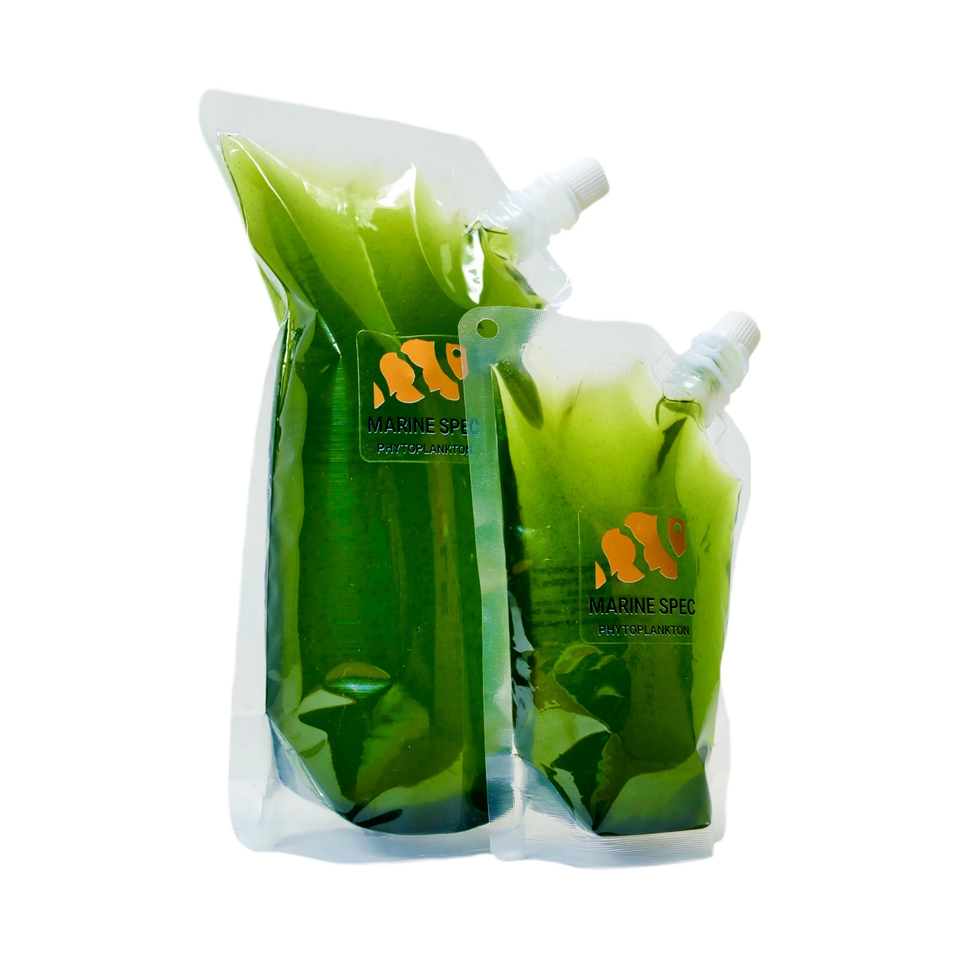

What copepods eat in a reef tank
Copepods feed on phytoplankton, and the ones we sell are cultured in house on our own live nannochloropsis. In a tank they can also graze on bacteria and detritus, so phytoplankton is one food on the menu rather than the only one.
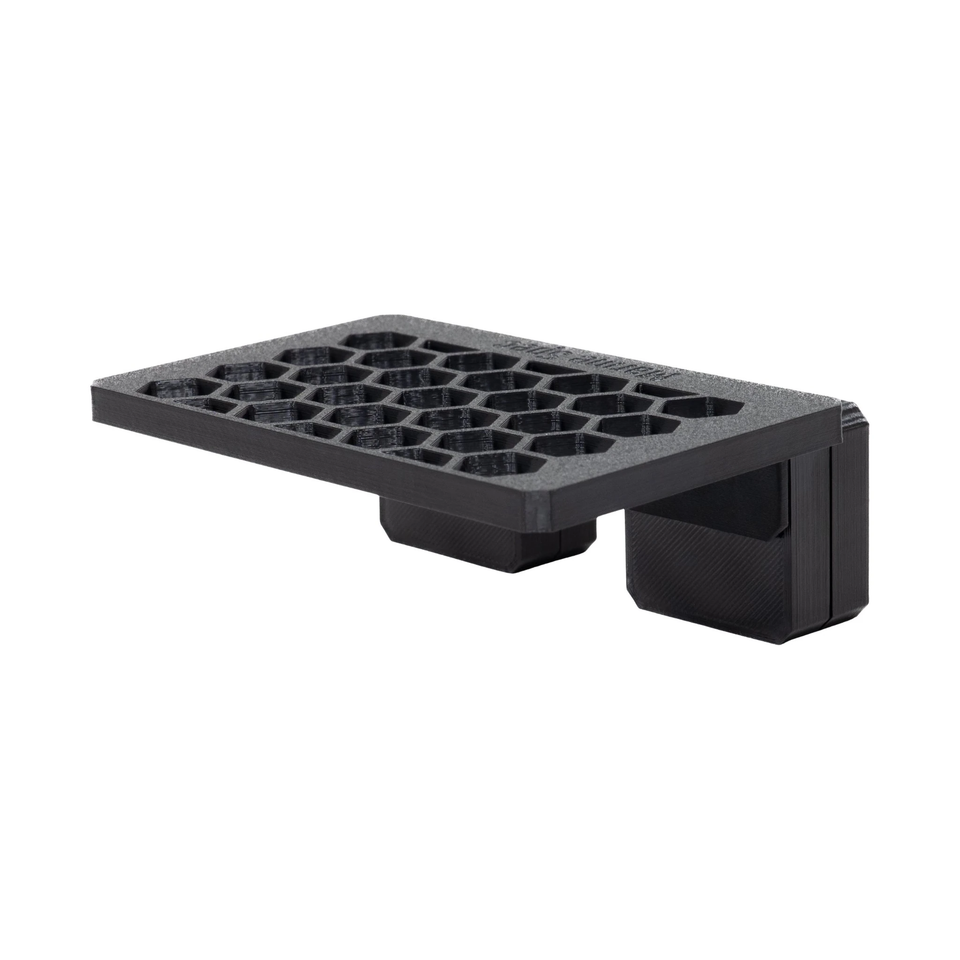
That matters for how you think about feeding. A tank with live rock, a sump and a bit of natural film already gives pods something to pick at. Our pod hotel product notes say that once a population is established, the crustaceans may feed on the bacteria and detritus living in the media above them.
Other pod foods exist, and some reef keepers use them.
We do not name or compare them here, because we only describe what we have instructions for. What we can say is that live phytoplankton is the food our copepods are raised on, which makes it the simplest place to begin.
The mix changes with the tank. A mature system with plenty of rock and some film on every surface gives pods more to graze, while a very clean new one leans harder on what you dose.
- Phytoplankton, bacteria and detritus3 food inputs
- CopepodsShelter in a hotel or rock crevice
- FishTake some as predators
Dosing phytoplankton for pods and for corals
Our instructions give 1 starting dose and do not split it by purpose. It is about 5ml per 45 litres of tank water, the same for a pod population, for corals or for both.
The difference is in what you are watching for. If the aim is pods, you care whether the food is still in the water after lights out, when copepods are most active. If the aim is corals, you care about what the polyps are doing in daylight. In practice many tanks get both effects from the same dose, so choose an amount, watch the tank and adjust.
We list thriving copepod populations among the benefits of feeding phytoplankton, so the pod effect comes with the same bottle. You can also use it to start a culture at home if you would like a steady supply.
Because every reef is different, we give a starting point and nothing more. Our dosing guide scales the 5ml figure by tank size, and the numbers beyond 5ml per 45 litres are simple multiples rather than tested amounts.
Dose, timing, skimmer and UV
Dose in the morning or evening, and switch off any UV steriliser or skimmer temporarily so the phytoplankton stays in the tank long enough to be eaten.
| Question | Answer from our instructions |
|---|---|
| Starting amount | About 5ml per 45 litres of tank water |
| Time of day | Morning or evening |
| Skimmer and UV | Off temporarily while you dose |
| Storage | Refrigerate on arrival and shake the bottle daily |
| Use within | 4 weeks recommended, though it can last longer |
The sum scales in a straight line. A 90 litre system starts at 10ml and a 450 litre system at 50ml. Switch the skimmer and UV back on afterwards, since that step is easy to forget.
Our instructions do not say how long to leave the skimmer off.
Many reef keepers leave it off for a few hours, and the sensible gap depends on your equipment, so follow the guidance for your own skimmer and UV. The live nannochloropsis phytoplankton comes in 250ml or 500ml.
Signs the pods are feeding
You will not watch a copepod eat, so look for indirect signs. These are general guides rather than measurements, and none of them is proof on its own.
- A torch held to the glass after lights out shows small pods, not just the ones you saw on day 1.
- The tint in the water has cleared by the next morning, which suggests the phytoplankton has been used.
- Pods turn up in parts of the tank away from where you added them.
- Numbers hold from week to week rather than vanishing after the first night.
Give it a few days between changes. If you alter the dose, the lighting and the flow all in 1 go, you will not know which of them made the difference.
If the water is still noticeably green a day later, you can dose less.
A faint tint that has cleared is normal. Food that lingers is food that is not being eaten, and that is your cue to reduce the amount. Pushing the dose up to chase a faster result usually just clouds the water.
What eats copepods
Plenty of reef fish eat pods, and some, such as mandarins, depend on them. A tank with several of those will turn pods over quickly, whatever you feed them.
Feeding more phytoplankton cannot outrun a very hungry predator, so shelter matters as much as food. Rockwork crevices help, and a pod hotel gives breeding pods a protected space. If you have no pods yet, live marine copepods start the population, and how to grow copepods covers seeding.
One slip is common: seeding pods, then letting the food supply lapse. A population with shelter and nothing to eat shrinks, so treat dosing as a routine you keep up as long as you want the pods.
Seed the pods at lights out, give them cover, then keep them fed. Each step guards against a different way of losing them, and skipping any of the 3 leaves a gap that dosing alone cannot fill.
The wider picture for hotels is in do copepod hotels work. All our live foods are listed in the live foods collection.